
Why do Brits like to queue? What makes a festival? What happens in cross-cultural friendships when world events rattle our communities? And does Saint Nick prefer to be called Santa Claus or Father Christmas?
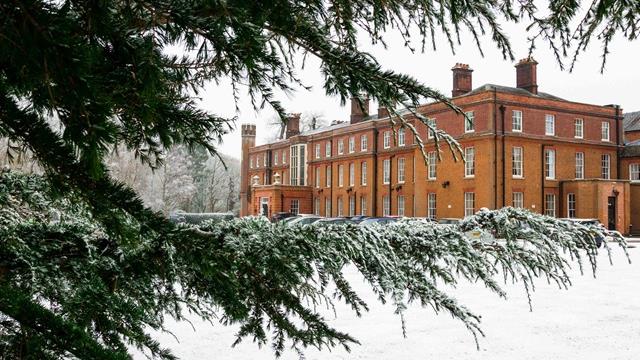
Unfortunately I was too starstruck to pose the last question when the man himself dropped by for an appearance at Christmas dinner, but we did get the opportunity to dive into all of these questions and more at Cumberland Lodge’s annual conference. Themed ‘Beyond borders: The role of festivals in supporting social cohesion’, this was a chance to spend three days with international graduate students who were studying a wide range of disciplines across the UK, as well as with my fellow Fellows at Cumberland Lodge.
When we weren’t busy oohing and aahing at the grandeur of Windsor Great Park and the sparkly decorations within the Lodge, we spent our time exploring what it means to cultivate community well in cross-cultural settings. This meant having to get to grips with what makes up a culture and how we can develop the muscle to move out of our own comfort zone.
While the sessions covered a lot of ground – we heard from speakers Dr Julie Siddiqui and Dr Lindsay Simmons about the importance of their friendship, in particular in their interfaith work, from Dr Krish Kandiah about how we can build a ‘nation of neighbours’, and we even designed our own festivals – what became apparent across all the talks and workshops was just how crucial it is to make space for what is normally unspoken.
Over the conference this looked like:
- Creating our own cultural icebergs, to be able to map out what are the invisible parts of our culture that underpin the more visible ones
- Seeing how powerful friendship can be in creating opportunity to ask questions safely that we may normally shy away from
- Having plenty of time, over dinners, walks and in between carols (and mince pies), to get to know other participants beyond just the questions of what it was that they were researching or working on, which tends to dominate in traditional networking spaces
The unspoken often remains so because it is what is deprioritised in the business of getting things done. But over the course of the conference I was reminded that both self-reflection and genuine, kind curiosity about others is necessary in building robust workplaces, schools, local communities and even nations. Going into 2026, I know that I want to create time for these things in my own practice, both professionally and personally and I hope many will join me in doing so.
Article by Cumberland Lodge Fellow 2025-27, Miriam Tomusk