
Since 1947, Cumberland Lodge has been home to an independent educational charity dedicated to tackling social challenges through dialogue and leadership development. But the building itself has a much longer history, dating back into the 17th century.
Born of revolution
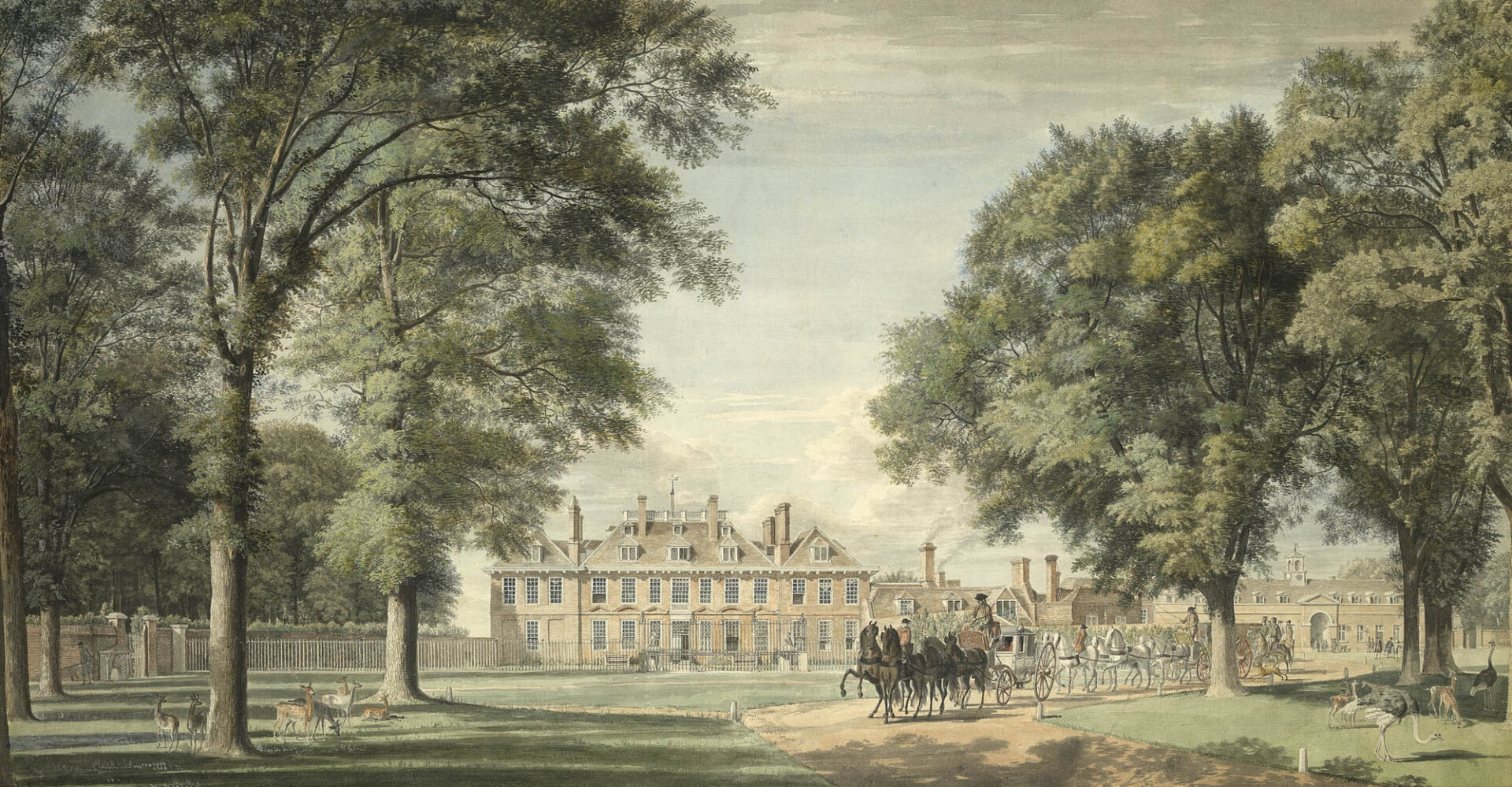
In the 1650s, following Oliver Cromwell’s victory in the English Civil War, land in Windsor Great Park was distributed to loyal supporters. Captain John Byfield purchased the largest plot and built a house at its centre. That land was the site for what has now become Cumberland Lodge.
When the monarchy was restored in 1660, King Charles II reclaimed the Crown’s lands and granted the house to his trusted adviser, Baptist May, Keeper of the Privy Purse. The Lodge became the official residence of the Ranger of Windsor Great Park – a role with responsibility for one of Britain’s oldest royal landscapes.
It was during this period that the Long Walk was created, helping to shape the landscape between the Lodge and Windsor Castle that millions of visitors enjoy today.
The home of duchesses and dukes
Over the next two centuries, Cumberland Lodge became home to some of the most influential figures of their age.
Among them was Sarah Churchill, Duchess of Marlborough, a close confidante of Queen Anne. She loved what she called her “Windsor Lodge”, describing it as “a thousand times more agreeable” than Blenheim Palace.
The house takes its present name from Prince William Augustus, Duke of Cumberland, who became Ranger in 1746. A controversial military commander, he left a lasting mark on both the estate and the building.
Working with architect Henry Flitcroft, the Duke expanded the house, built new stables and transformed the surrounding landscape.
A giraffe and other remarkable residents
Windsor Great Park has long been home to more than just people.
The undefeated racehorse Eclipse, widely regarded as one of the greatest thoroughbreds in history, was bred in the Great Park in 1764.
Perhaps the most extraordinary visitor arrived in 1827. The first living giraffe seen in Britain was housed temporarily at Cumberland Lodge before moving to the royal menagerie at Sandpit Gate. It was a gift to King George IV by Muhammad Ali Pasha of Egypt.
A Victorian family home
In 1872, Queen Victoria’s daughter, Princess Helena, and her husband Prince Christian of Schleswig-Holstein made Cumberland Lodge their family home. Queen Victoria visited regularly and is said to have entertained Prime Ministers William Gladstone and Benjamin Disraeli here.
Princess Helena was also a passionate advocate for social causes, and helped establish what became the British Red Cross.
A constitutional crisis
In 1936, Cumberland Lodge played a small but significant role in one of the most dramatic moments in modern royal history.
Meetings held here between Prime Minister Stanley Baldwin and the King’s Private Secretary helped shape the events that led to the abdication of Edward VIII.
A mission for a new era
The modern story of Cumberland Lodge began in 1947.
Following the death of Lord FitzAlan of Derwent, the last private resident, King George VI granted the Lodge to a new educational foundation, led by pioneering academic Amy Buller. Influenced by the lessons she drew from her groundbreaking book Darkness over Germany, Buller believed young people needed opportunities to discuss difficult social and ethical questions openly and honestly.
Under the founding patronage of Queen Elizabeth The Queen Mother, Cumberland Lodge became a place dedicated to dialogue, learning, and leadership.
Cumberland Lodge today
Nearly 80 years later, that mission continues.
As an independent educational charity, Cumberland Lodge empowers young people to address social division and build more peaceful, just, and inclusive societies.
The Lodge also operates as a social enterprise, providing a venue for conferences, events and residential stays, with income supporting our charitable work.
This helps to ensure that Cumberland Lodge remains a place where people come together to learn, reflect, and shape a better future.
Darkness Over Germany
Published in 1943, Darkness over Germany is a remarkable book by a pioneering young woman, E. Amy Buller. It provides a fascinating insight into the radicalisation of young Germans in the late 1930s, and a timely reminder of how a message of hate once fuelled a nation to unite.