
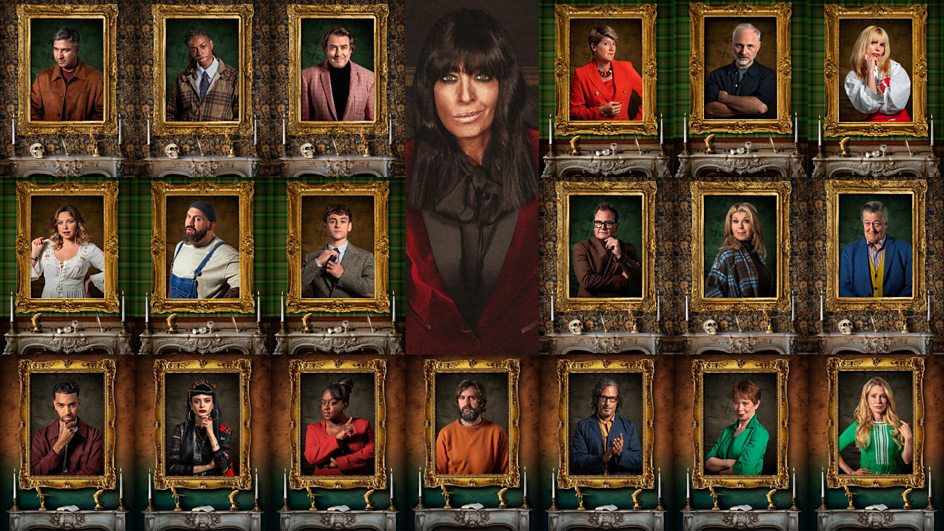
The Celebrity Traitors finished last week, with Alan Carr’s victory cementing its status as appointment television. The inevitable think pieces have followed. Here’s another.
For those who don’t know, the rules of the game are simple. As it starts, players are assigned a role – Traitor or Faithful. The identity of the Traitors is known only to other Traitors. Each night, players gather for a roundtable discussion and vote. The Faithfuls’ goal is to vote out a Traitor, while the small group of Traitors must avoid detection and “banishment”. Traitors are also to “murder” the Faithfuls without giving themselves away.
During the show, Faithfuls have to build theories from limited evidence. In the celebrity version, this even included drawing on evidence from outside the game. The first banishment focused on Niko’s career as a prankster, as though that could reliably predict his behaviour within the castle.
More generally, individual Faithfuls act on gut instinct, even when these instincts are dressed up in rational justification after the fact. At the roundtable, players cite “suspicious” behaviour that might include eye movements, reactions to key events, speaking too much, or speaking too little. In all likelihood, which behaviour they choose to highlight is largely intuitive.
In moral psychology, dual process theory may help to explain this. It suggests that our thinking operates as a dual system: fast thinking is intuitive and automatic, generating immediate suspicions; slow thinking is more deliberative and analytical. The problem arises when we use slow thinking in service of beliefs that originated in our fast, unconscious reactions. We may feel first, then build the case later.
During the show, Sir Stephen Fry tried to short-circuit this link. After a few unsuccessful votes, he suggested an immediate vote at the roundtable, bypassing discussion altogether. Implicitly, he recognised the limitations of our rational deliberation, even acknowledging its role as a distraction. Two episodes later, Fry looked defeated and distrustful of his own theories, trapped between intuition and reasoning.
In this way, The Traitors offers a small window into how we actually think — stripped of our ideal of rational, thought-through decisions.
Sometimes working with groups at Cumberland Lodge feels surprisingly similar to The Traitors. Admittedly, there are no banishments, “murders”, or pots of prize money to be won. But historic rooms like our Tapestry Hall wouldn’t look out of place on the screen.
We create spaces for discussion and dialogue on difficult questions. At times, the same dynamic appears. We often arrive at our positions through intuition and deeply-held values. The sum of our experiences and our self-conception matters as much as our stated position.
But recognising this pattern opens up possibilities. As we explore these important questions with others, we may realise that we can test our intuition, rather than simply defend it. We can suspend judgement, pause, and approach a challenge with fresh thinking.
Article by our Programme Manager Gareth Gould